.jpg)
 (1).jpg)
 (2).jpg)
.jpg)
.jpg)
 (6).jpg)
 (7).jpg)
.jpg)
 (1).jpg)
.jpg)
.jpg)
 (6).jpg)
.jpg)
.jpg)
 (3).jpg)
 (5).jpg)
 (2).jpg)
.jpg)
.jpg)
 (2).jpg)
.jpg)
.jpg)
 (8).jpg)
 (10).jpg)
 (12).jpg)
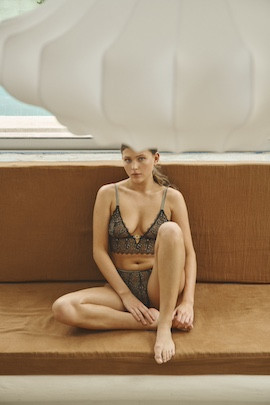

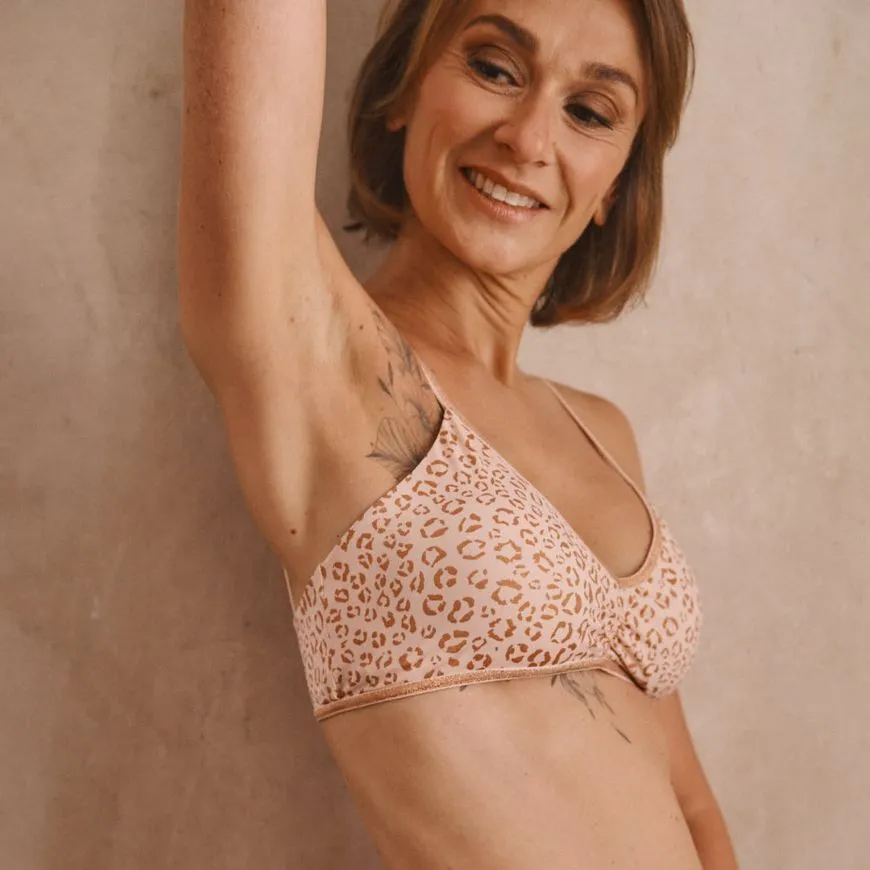
Portrait of Ludivine Ginhoux who embodies our La Nouvelle Care line
24 October 2025
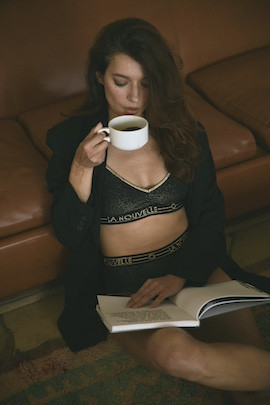
In October, La Nouvelle unveiled La Nouvelle Care, a lingerie line dedicated to breast cancer survivors. Engineered to combine comfort and elegance, this collection has been designed to help women regain confidence and get back their femininity after the ordeal of illness. That effort was embodied by Ludivine Ginhoux, who experienced breast cancer at the age of 35 and agreed to be our muse and share her story. Her testimony is an ode to resilience, rediscovered femininity and team strength.
.png)
Ludivine, you have agreed to be the face of our La Nouvelle Care line. Could you tell us a little about yourself?
I am 40 years old, I was born and raised in Marseille where I still live. I have three children: a 13-year-old boy and 7-and-a-half-year-old twin girls. In terms of what I do, I am the director of internal audit for a private healthcare group. Five years ago, in the middle of the first lockdown, I detected a lump in my breast which appeared all of a sudden. So I consulted a doctor and went down the usual path: imaging and biopsy before I was diagnosed with triple-negative breast cancer with level 3 severity. The highest. Time was of the essence, and the medical team at Saint-Joseph Hospital - whom I appreciate very much and who have been looking after me for all these years - advised removing the right breast before a six-month course of chemoradiotherapy treatment. The mastectomy took place very soon, a week after the diagnosis was announced.
It must have been quite a shock.
Oh yes. Especially when you're young, and don't have any health problems or family history. At the time, I didn't expect it at all. It was a huge shock. You feel like you've fallen ten floors. You don’t know what lies ahead, and that is scary. It’s a difficult experience, but fortunately I was surrounded by my family, my friends and I found a lot of outside help.
What helped you the most during the illness? Any individual, organisation or support?
I had support from several sides. First, physiotherapy. Two weeks after the operation, I began to see a physiotherapist, Vanessa Ohanian, who specialises in post-operative rehabilitation for breast cancer. An acquaintance had told me about her and I saw her every week for a year. She played a key role, both physically and psychologically. As did the psychotherapist who looked after me at Saint-Joseph Hospital. Then, I consulted a lot of alternative medicine: homeopathy, fascia therapy, energy healing and faith healers who heal burns (for the radiotherapy). I also started yoga at the Shakti Shala centre. All this has allowed me to reduce the side effects but also to take care of myself, to reconnect with my body. Treatments can be dehumanising: you become just a number, one among so many, and you lose your hair. When you lose your hair and eyebrows, you lose a part of yourself, and all patients start to look the same. It’s very difficult to live with. That’s why before the chemo, I had permanent eyebrow make-up at the Atelier du Sourcil, to get back my face. I recommend it to everyone, it’s really good for the mind, with state-of-the-art techniques.
How did the illness affect your relationship with your body and your femininity?
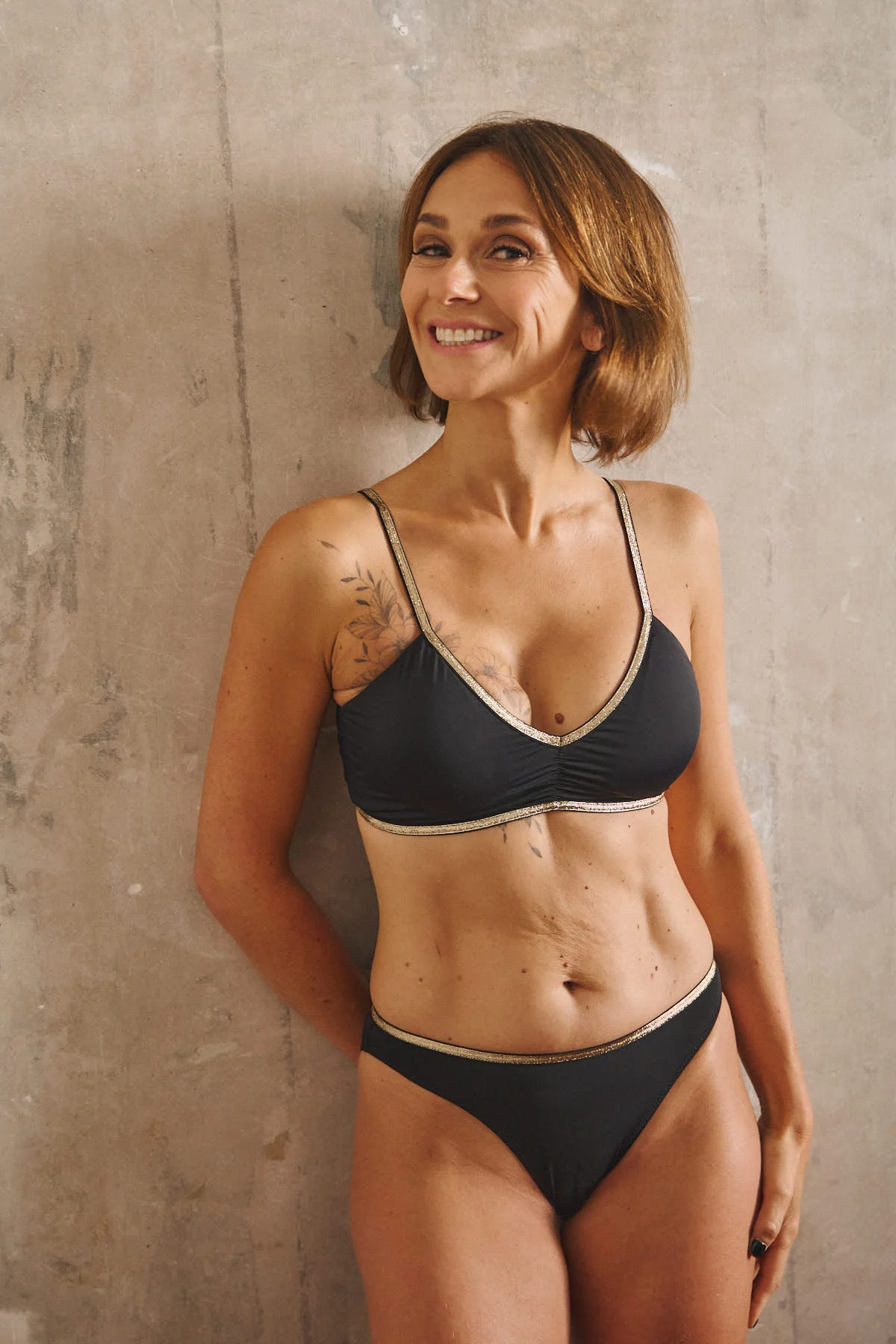
This ordeal has changed me profoundly. Now, I listen to my body. When it tells me it’s tired, I slow down. It’s like I'm communicating better with it. For femininity, things were more difficult. Breasts are very sexualised in our society. They symbolise appeal, attractiveness. I was afraid of the gaze of others, of my partner, afraid of no longer pleasing or being desirable. For me, reconstruction was an essential step. I did it a year and a half after the mastectomy. It’s a major surgical procedure but I was glad to no longer have an external prosthesis. I felt more comfortable and more confident when I’m dressed. Unfortunately there were still the many scars, which I decided to cover in part with a tattoo. That has been very important in my journey towards accepting this new body.
How did this idea come about?
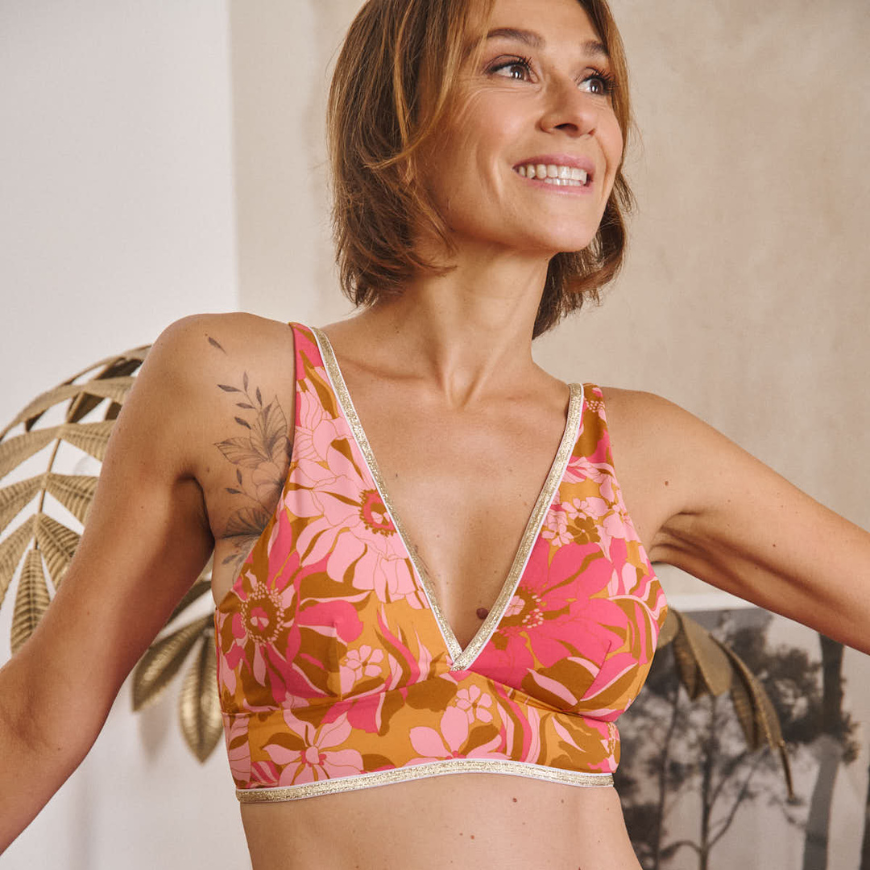
My radiotherapist first told me about a patient who had had one. I had always wanted a tattoo so I thought it was a great reason to get one. A friend helped me find a tattoo artist capable of doing it, Marta Madrigal, whose works in Toulouse. She has experience with scarred, burned, irradiated skin. I chose a floral pattern, with a large peony in the centre and three small flowers for my children. It has become a strong symbol for me.
Regarding lingerie, did you manage to find suitable underwear during and after your breast cancer?
Post-operative lingerie wasn't very cheerful five years ago. At the beginning, I had an external silicone prosthesis, to be inserted into a bra. I was directed to prosthesis makers who provide the bra with the prosthesis but the designs were thick, very basic, quite clunky. For a year and a half, I wore this type of bra, without knowing that something else existed. It wasn’t sexy, it wasn’t pleasing. After the reconstruction, I had resigned myself to never wearing beautiful lingerie until a friend introduced me to La Nouvelle. I immediately felt good in their designs, which I found comfortable, elegant and sexy without overdoing it. The fabrics are soft, light, perfect for weakened skin.
Why did you agree to be the face of this La Nouvelle Care line?
The friend who introduced me to the brand told the team about me, and they came to me with this wonderful proposal. I accepted at once because I had been looking for a way to get involved and support the cause of breast cancer for a long time. By posing and sharing my story, I hope to raise the profile of that fight and give strength to women with breast cancer.
Why, in your view is this La Nouvelle Care line important?
I wish I had known a brand like La Nouvelle at the time. Comfortable and elegant post-operative underwear would have changed my relationship with my body and my femininity. What I find beautiful is that this line can also be worn by all women, whether or not they have had cancer. This blurs the line between the ‘ill’ and the ‘healthy’. You don’t stand out any more. That is essential for self-esteem. And the two comfort bras in the line (Hope comfort bra and Faith comfort bra), are really soft on scars and sensitive skin. You can see that they have done a lot of research and development work in consultation with the medical profession.
What touched you the most about La Nouvelle approach?
First, the fact that they are committed without being personally affected. That’s quite rare. Also, I met the founders Alix and Aurélie and the teams during the shoot: I was struck by their kindness, their simplicity and their team spirit. It is a brand on a human scale, with authentic values. And I know, having worked for five years in the textile industry, that this kind of initiative is rarely profitable. They’re doing it out of conviction, out of altruism and not out of interest.
Is there a design or detail that particularly appealed to you?
Yes, I like the fact that the team chose to adapt the Georgia design, my favourite and their bestseller. It allows women with breast cancer not to feel left out. I also really like all the work that has been done on the seams for more comfort. I was already wearing La Nouvelle bras but the La Nouvelle Care bras are even softer, like a second skin. You don’t feel them when you move and that’s important with scars. The fabric is soft, slightly thicker than classic designs to allow the insertion of prostheses or removable pads of different sizes that help balance the figure. And I love the leopard print, which is very trendy. This is my favourite design!
How would you sum up this line in one word?
I would say sunny. Because it is beautiful, bright and brings light to the women concerned, who may feel their illness has made them invisible. It symbolises hope and rediscovered femininity. Like many supportive treatments, it brings a little joy in a painful journey. Thank you for your testimony. To conclude, would you have a message for women who discover they have cancer? I would tell them: it's going to be fine. A friend once said to me: “You'll see, you’re stronger than you know.” And it's true. When you find out you have breast cancer, everything falls apart, you think nothing will ever be the same again. But it passes, like other things. It’s an experience that allows you to grow, to build yourself, to become better. Don’t be afraid: you can do it. Being supported by friends and family, talking about the disease, not hiding it, all this helps to make it more acceptable. Looking back, I can even say that I have very fond memories of this period, because it taught me to live differently, to savour everyday things and realise how lucky I am to be alive.
You may also like
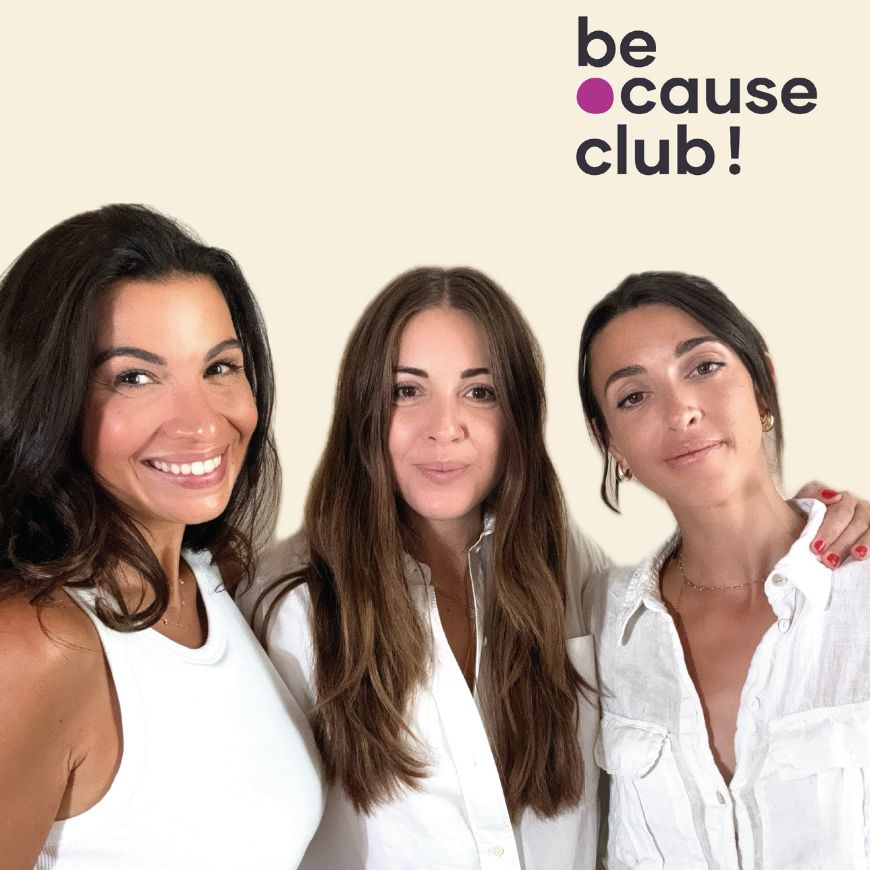
Be.Cause, a Marseille-based voluntary organisation committed to helping women with cancer.
La Nouvelle x Ginette NY, the lucky collaboration.